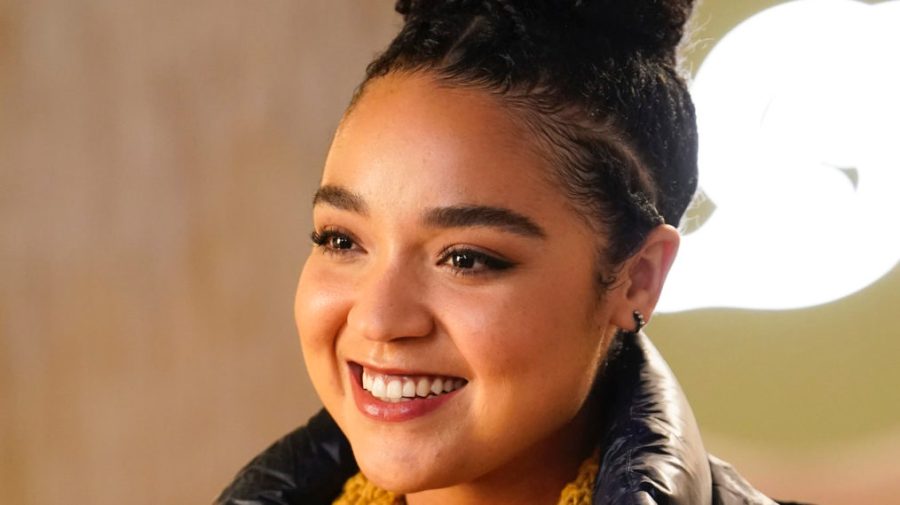
The Bold Type’s Aisha Dee calls for change
By Meghan Nelligan
If you are a religious watcher of the Freeform hit show, The Bold Type then you would probably describe it as the following: inclusive, progressive, and well, bold. Just finishing their fourth season (cut short due to COVID-19) and potentially on their way to a fifth, the show has covered a lot of ground. The Bold Type tells the story of three millennial women who work at a global publication Scarlet in New York City. The series is inspired by real-life former Cosmopolitan editor-in-chief Joanna Coles. Since 2017, Freeform has used this series to discuss important topics such as gun violence, reproductive rights, workplace dynamics, sexual assault, racial profiling, immigration, and more. One of the three protagonists is a Black queer woman named Kat Edison. The main storyline for her involved a relationship with a queer, Muslim woman who lived in the United States on a work visa. As a fan of the show, I have followed Kat’s storyline for years: from her embracing her sexuality, speaking up against corporate bosses, to calling out her close friends for their missteps. Kat is a woman I have grown to admire.
However, this season, there was a shift in Kat’s character. A usually outspoken and unapologetic liberal, Kat got romantically involved with a prominent conservative woman who is ignorant, privileged, and oppressive towards minority groups. While The Bold Type often pushes boundaries and produces thought-provoking scenes, this decision found Kat’s character putting aside her morals for a toxic figure towards her community. While Kat’s character never shied away from having difficult conversations, hearing out a differing perspective, or self- analyzing—she would never disregard harmful ideologies. As a character who *spoiler
alert* was fired for exposing a board member’s financial support for conversion therapy, this love story is far-fetched.
Not long after the season four finale aired, Aisha Dee posted a statement on her social media pages about the lack of representation The Bold Type fosters. Not only did she explain her disapproval for her character’s story arch, but she called attention to the need for diversity off-screen. Currently, a dialogue around racial injustices, lack of representation, and workplace misconduct have gained traction. While these types of discourses are not new, the calls for change are being heard more than ever. Many companies and figures alike are being called out for their racist rhetoric, toxic workplaces, and discrimination. Just google Greg Glassman, Ellen DeGeneres, Lea Michele, or Adam Rapoport. None of these accusations truly shocked me as we are looking at privileged individuals. However, when Aisha Dee posted her letter for The Bold Type producers and executives, I was surprised.
Since 2017, I have watched The Bold Type and have fallen in love with its three protagonists: Kat, Sutton, and Jane. I have recommended this series countless times, using the word “feminist” to describe it. As a young woman, this show has taught me a lot about growing up. I often found myself reflecting after difficult and uncomfortable scenes. It challenged my ideologies and pushed me to have conversations with friends about social issues. The series showed me how to embrace my sexuality, independence, and my voice. I have thought so often: “I want to be just like (enter character’s name).” Not because they are perfect people, but because they are real and raw.
Yet, as I stumbled upon Dee’s letter via Instagram I felt deceived, lied to, fooled. How can a show that is self-proclaimed as diverse and inclusive be the complete opposite of that behind the screen? I felt even more disappointed in myself as a feminist for assuming a show like this did not erase BIPOC and queer voices. If it was not for Aisha Dee’s statement, I would probably never know about how the voices behind one of my favorite shows are majority white, heterosexual, and cis-gendered. Perhaps this is not only a wake-up call for the creators behind The Bold Type but the fans as well. It is not enough to just see representation on the screen and not look beyond that.
The hypocrisy of The Bold Type is disturbing and ultimately, harmful. The Bold Type is profiting off of intersectional and diverse storylines while simultaneously disregarding those very voices on set. It is also telling that the only person speaking out against this work environment is a Black woman. While it is admirable and of every right for Aisha Dee to use her platform to speak on these issues, Black women should not be the only ones to take on this labor. Where are the white people that work for The Bold Type? Why are they not speaking out against this culture? Why did it take four seasons for us to realize there is a problem?
For reference, the following are the claims that Aisha Dee has made about the environment on The Bold Type: it took two seasons for a BIPOC to be in the writer’s room, it took three seasons to get someone in the hair department who could work with textured hair, there has never been a Black, female head of department nor any queer Black or Muslim women writers on set. Further, throughout forty-eight episodes, only two episodes have been directed by Black women. And even as these few individuals have worked on set, it should not fall on a few people of color to represent an entire community. How do we expect the stories of BIPOC to be truthfully and valuable told if all the people in the room are white?
It seems incredibly irresponsible that not a single Black or Muslim woman was at the table to depict the romantic relationship between Kat Edison and Adena El-Amin. This relationship was a pivotal moment for Kat as it allowed her to come to terms with her sexuality. Dee’s character deserves the same attention and care as that of her fellow actors, Katie Stevens, and Meghann Fahy. On this neglect, Dee writes: “I do not believe this is intentional. We cannot bring specificity and honesty to experiences we have not lived.” It should not land on white writers
to imagine what a person of color, specifically with Kat, a Black woman experiences. Further, it cannot and should not be on the shoulders of the one Black writer in the room to craft the tales of all characters of color. What does it say when the two white women have an entire team of writers to relate to them when the one Black woman has at best, one person?
It is clear in her letter that Aisha Dee holds love for The Bold Type and all it has given her. She also makes it apparent that this statement is not a dig or an attack. Instead, it is a call for change. After all, if you love something, you should expect it to be its best version. Dee knows this show can do better. And as a fan, I know this show can do better. While a fifth season is not confirmed, Dee has met with several writers, producers, and executives at Freeform along with Universal TV. She ends her letter with the following: “This is an opportunity to walk the walk, to really practice the things THE BOLD TYPE teaches.” This request is not impossible as Aisha Dee has done just that. She has done just what her beloved character Kat Edison would do: speak up.
 Multi-Hue Magazine